

Changes in government often prompt questions about what may lie ahead for your finances. And the appointment of Andy Burnham as UK P Minister marks the beginning of a new political chapter.
For Australian expats living in the UK, any change of government is worth paying attention to. Decisions made in Westminster can influence your financial plans, from taxation and pensions to property ownership and investment planning.
Although it’s important for you not to make financial decisions based on political speculation, understanding the areas most likely to be affected can help you prepare for future changes.
Here are some key financial issues we recommend you keep an eye on in the coming months as the new government begins to set out its intentions.
Any new tax legislation is likely to affect your cross-border finances
Every new government brings its own economic priorities, and these are often reflected in future tax policy.
Andy Burnham has pledged to adhere to the policies set out in the Labour Party’s 2024 election manifesto regarding no increases in Income Tax, VAT, or employee National Insurance contributions.
However, tax policy is likely to evolve in the coming months as the new government seeks to balance public spending and other financial commitments with economic growth.
For Australian expats, the position is more complex because you are likely to have financial interests in both countries. Because of this, any changes to UK tax legislation could affect your UK investments, pensions, or property while also influencing your wider cross-border financial planning.
We would caution against reacting to media speculation between now and the Autumn Budget on 28 October, and would advise reviewing your financial plan only when significant legislation is introduced.
Ensure your pension plans continue to support your long-term objectives
As an Australian expat, your UK pension may represent one of your largest financial assets.
Because of that, understanding your options about the pension fund you have accrued in the UK, and the implications of any changes in legislation that could affect it, remains one of the most important aspects of financial planning.
While there have been no confirmed pension reforms under the new administration, pension legislation has changed regularly in recent years. Most notably, the announcement that, from April 2027, your pension fund will be assessable for Inheritance Tax (IHT) in the UK.
This represents an important change for many retirees. Historically, some individuals have chosen to draw on other assets first and preserve pension wealth as a tax-efficient way of passing assets to future generations. From April 2027, that approach may become less attractive in some circumstances, particularly where pension benefits form part of an estate that could be subject to IHT.
There is also an additional consideration for larger estates. Pension funds may count towards the £2 million estate value threshold at which the Residence Nil Rate Band begins to taper away. This means that pension wealth could not only increase a potential IHT liability but may also reduce the amount of valuable tax-free allowances available to your beneficiaries.
With these changes on the horizon, it may be sensible to review your pension arrangements as part of your wider financial plan, particularly if you intend to leave assets to family members or if retirement in Australia remains one of your longer-term goals.
Maintain a long-term perspective for your investment strategy
Financial markets often react to political change, particularly while investors assess the priorities of a new government.
As you can see from the chart, in the short term, UK markets have reacted favourably to the arrival of the new prime minister, with the FTSE 100 reaching a new historic high and heading towards 11,000.
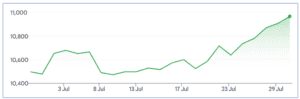
Source: Google
For long-term investors, reacting emotionally to political events can sometimes do more harm than good, whether that’s buying or selling stocks.
Maintaining a diversified investment portfolio aligned with your objectives is usually a more effective approach than attempting to predict how markets will respond to future announcements from the new prime minister.
Find out more: 6 crucial investment tips for Australian expats in the UK
Changes to social care funding could affect your estate plan
In a recent speech, the new prime minister indicated that social care reform will become a major priority. While no final funding model has been confirmed, various options have been discussed publicly, including potential changes to how care is funded and broader discussions about wealth taxation.
Although it would be premature to make planning decisions based on speculation, this does provide a timely reminder to review your estate planning arrangements, particularly if you are looking to stay in the UK.
For expats with assets in both Australia and the UK, estate planning can be particularly complex. Regular reviews can help ensure your arrangements remain appropriate regardless of future legislative changes.
Ensuring your will remains up to date for each country where you hold assets, reviewing Lasting Powers of Attorney, and checking beneficiary nominations can all help ensure your estate passes according to your wishes while remaining as tax-efficient as possible.
The housing market may change
If you’re considering buying your first UK property, moving home, or investing in property, future housing policies are likely to impact the market over the coming years.
Housing policy changes often generate significant headlines, but decisions about buying property should usually be guided by personal circumstances, affordability and long-term objectives rather than government policy announcements alone.
If your intention is ultimately to return to Australia, it’s worth considering how a UK property fits into your broader financial strategy, including potential tax implications and future currency movements.
Find out more: A guide to property purchase for Australian expats in the UK
Keep focusing on what you can control
Political change is an inevitable part of life, but successful financial planning has always been about focusing on the factors you can control.
Maintaining an appropriate investment strategy, making full use of available tax allowances, reviewing retirement plans, and keeping your estate planning up to date are all actions that remain worthwhile regardless of who occupies Downing Street.
While the Burnham government may introduce policies that affect personal finances over the coming years, individuals with a clear, regularly reviewed financial plan are likely to be far better placed to adapt than those who wait until changes have already taken effect.
Cross-border planning becomes even more valuable
As an expat, you already face financial decisions that span two countries.
You may have UK pensions, an Australian super, investments in both countries, property assets, and future plans that could involve either remaining in Britain or returning home.
When governments change, understanding how any new legislation interacts with existing cross-border planning becomes even more important.
Rather than looking at individual issues in isolation, it’s often beneficial to review your entire cross-border financial position to ensure your investments, pensions, tax planning, and estate planning continue to work together.
At bdhSterling, we help Australians living in the UK make informed decisions about financial planning and cross-border wealth management.
With advisers based in both the UK and Australia, we’re uniquely positioned to help you build a financial strategy that works regardless of where you are living.
If you’d like to discuss your own circumstances, we’d be happy to help.
Please note
The value of your investment can go down as well as up, and you may not get back the full amount you invested. Past performance is not a reliable indicator of future performance.
This article is for information only; it does not take into account your personal objectives, financial situation, or needs.
Please do not solely rely on anything you have read in this article and ensure that you conduct your own research to ensure any actions you may take are suitable for your circumstances.
All contents are based on our understanding of HMRC, which is subject to change.